Can You Design a Water System for a Whole Community? 🌎
At a Glance 🔍
Challenge: Design a community water system that responds to different people's needs.
Ages: 6–10
Time: 45–60+ minutes
Engineering Field: Environmental, Civil & Systems Engineering
Engineering Practice: Ask, Imagine, Create, Test, Improve
Content Focus: Systems, infrastructure, access, and design constraints
Caregiver Role: Help your child consider different community members and changing conditions. Let your child decide how to respond.
Materials 🧰
Start With This
- Paper or cardboard
- Markers, crayons, or pencils
- Recycled containers or small boxes
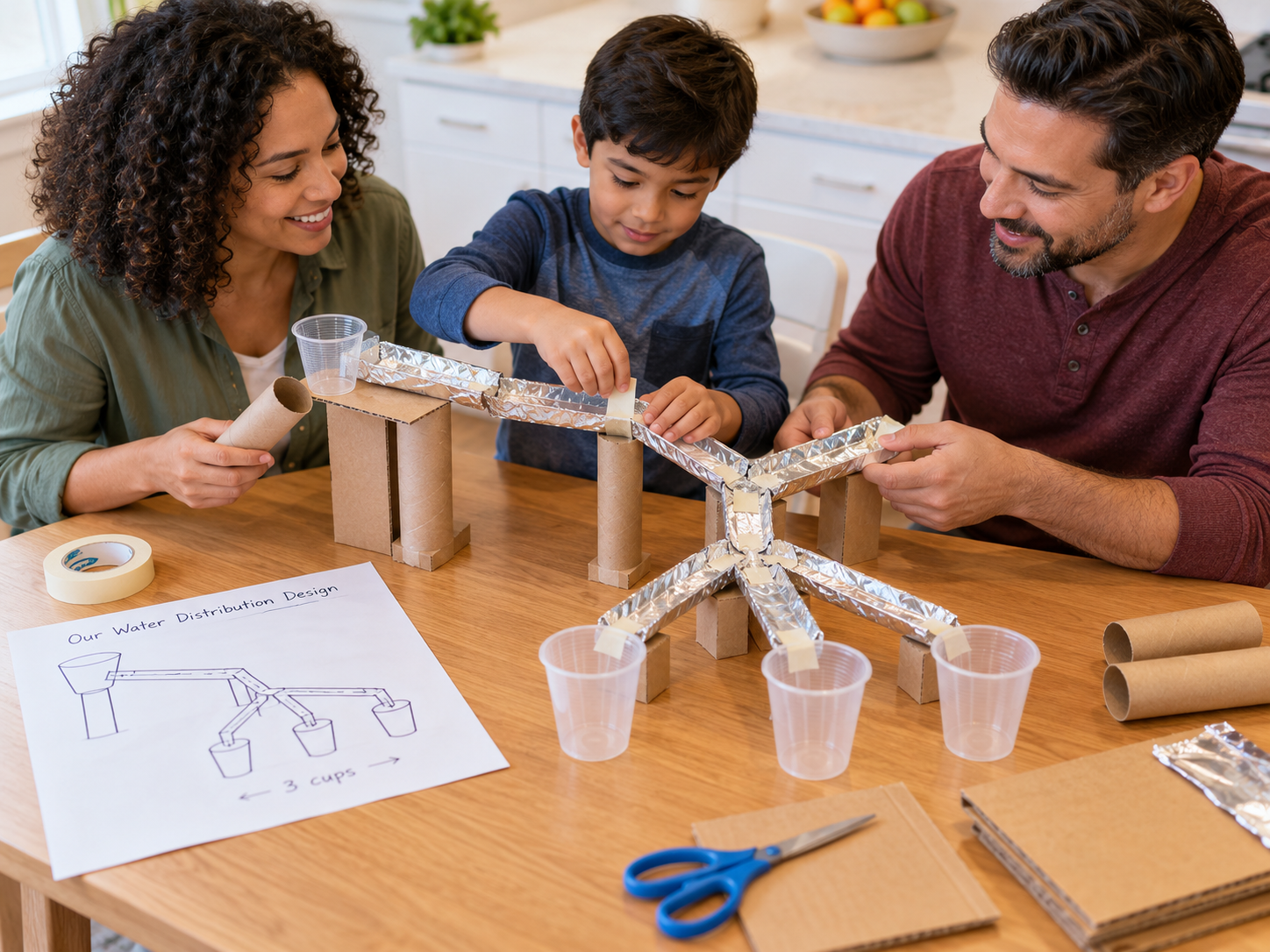
- String, tape, straws, aluminum foil, or other household building materials
Optional Extras
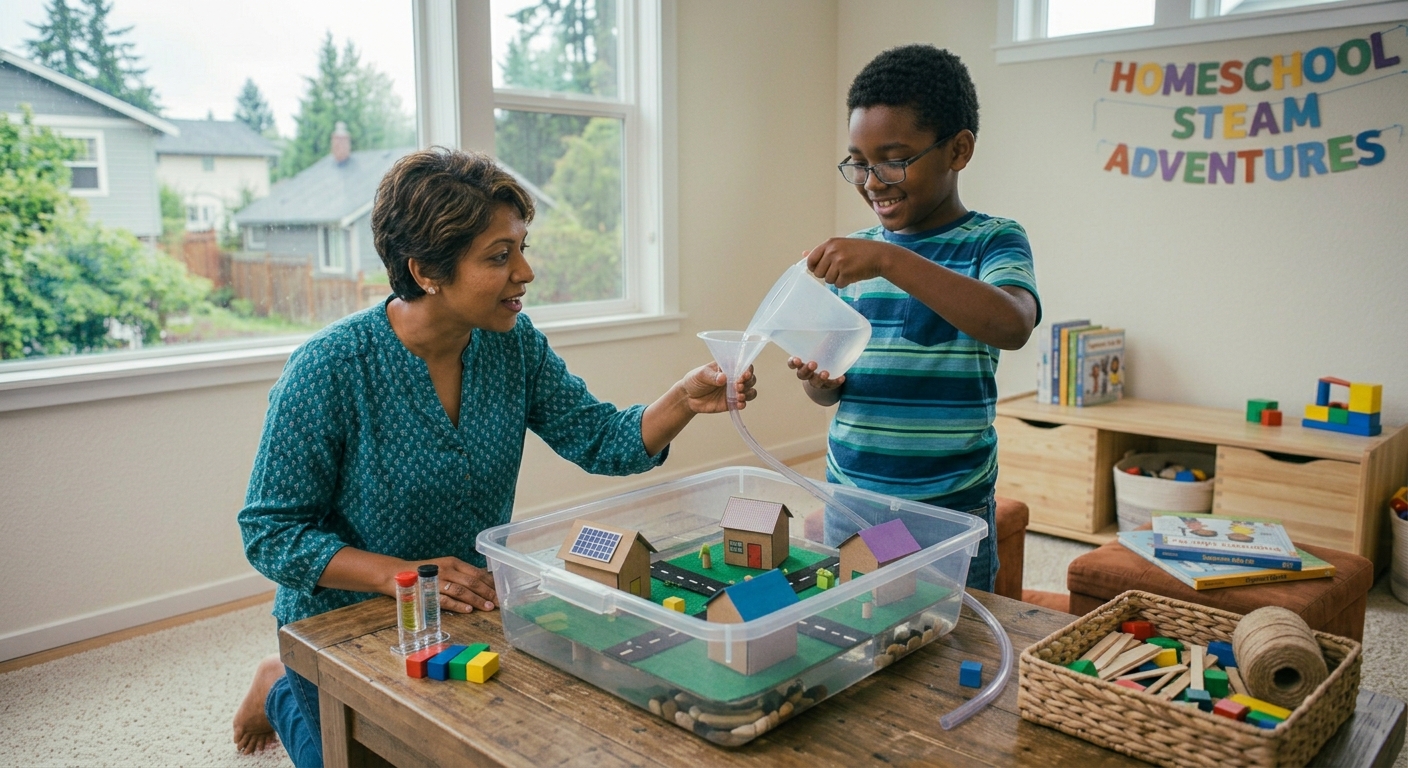
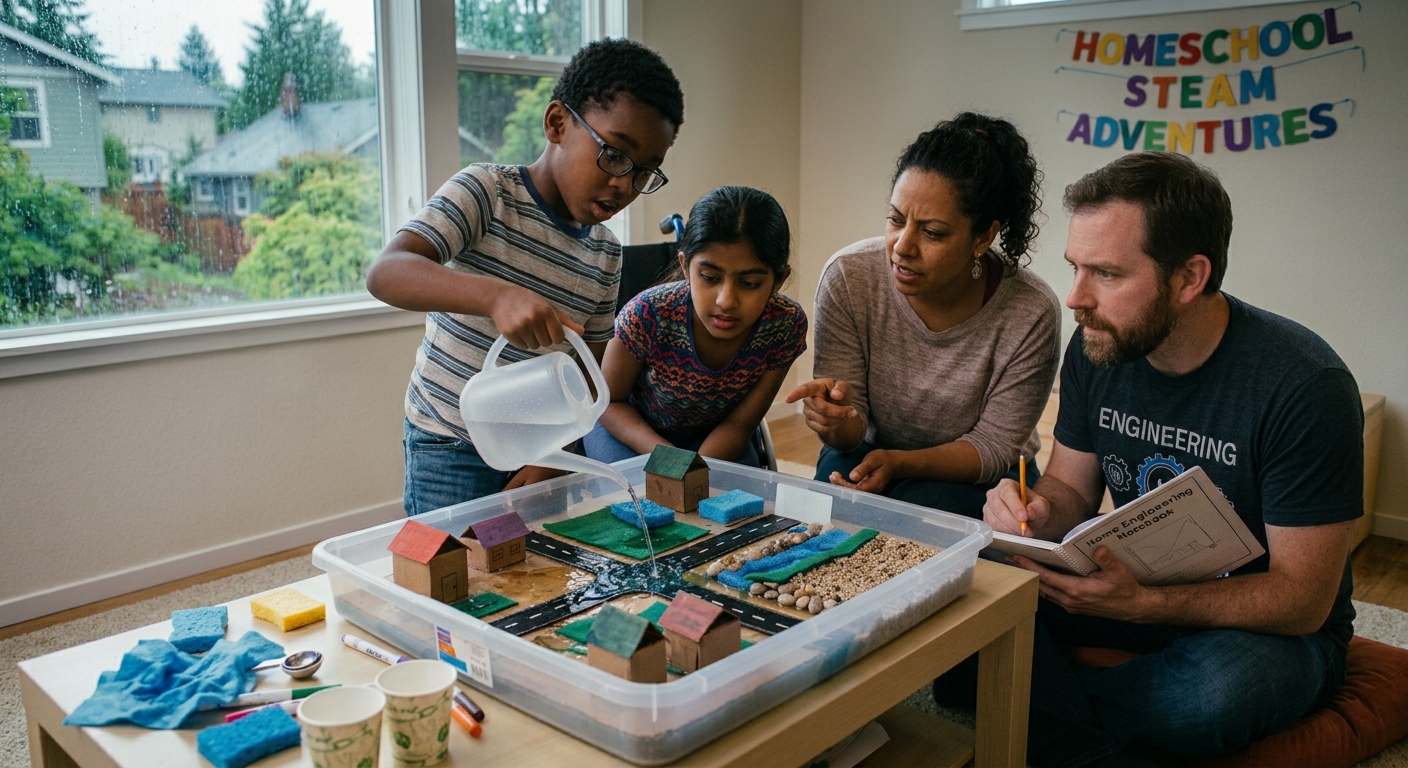
- Water and a tray for testing
- Small toys or blocks representing buildings
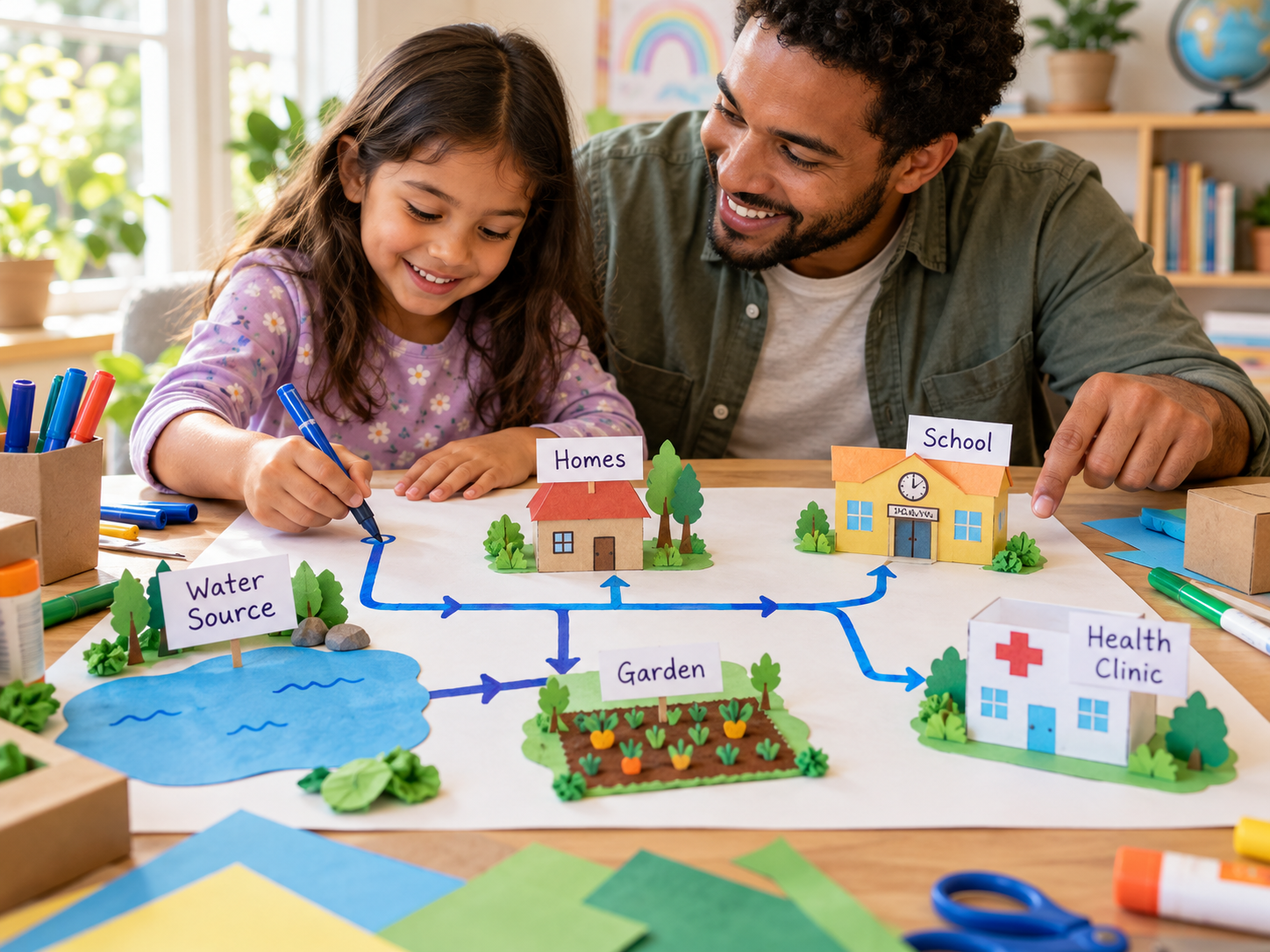
- Drawings of homes, schools, gardens, or clinics
- Sticky notes to represent different community members and their needs
You Can Build or Draw!
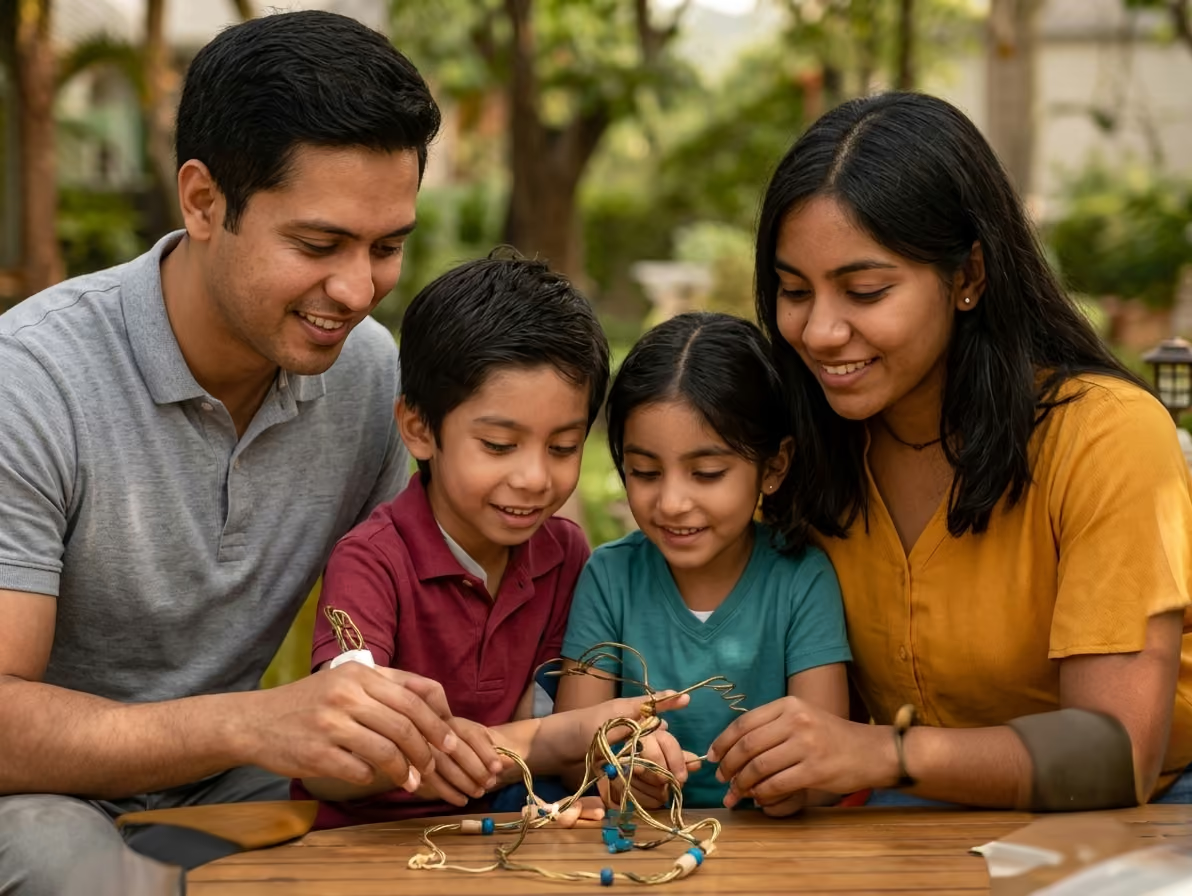
Some children may want to create a physical model.
Others may prefer drawing a map or explaining their ideas.
Some may combine building, drawing, and storytelling.
All of these approaches can be part of engineering design!
Choose what works best for your family.
For Caregivers ❤️
This final challenge brings together ideas from the previous water activities.
Your child will think about how a water system might serve an entire community rather than just one destination.
The most important question isn't only:
"Does it work?"
It's also:
"Who does it work for?"
Encourage your child to think about people with different needs, routines, abilities, and circumstances.
A successful water system should consider the people who depend on it.
You can introduce new community members or unexpected situations, but let your child decide how to adapt the design.
There is no need to build a complicated model. A simple drawing with one water source and a few destinations is enough to begin.
Remember: Listening, explaining, drawing, pointing, building, and redesigning are all valuable ways to participate.
Start Here 🌟
Water Connects a Community
Imagine your family is helping design a new community.
People need water for many reasons:
- Drinking and cooking
- Washing and cleaning
- Growing food and caring for plants
- Looking after animals
- Running schools and businesses
- Supporting hospitals and emergency services
But where will all that water come from?
How will it reach different places?
And what happens to the water after people use it?
A water system has many connected parts:
Water comes from a source → moves through a system → reaches people and places → is used → and may need to be collected, treated, or returned to the environment.
Engineers must think about how these parts work together.
They also need to understand the community they're designing for.
What happens if one part of the system stops working?
What if some families live farther away from the water source?
How can engineers design a system that works for different people?
In this lesson, your family will explore how engineering decisions can affect an entire community.
Choose Your Starting Point 📖
Story Connection 🏘️
A New Neighborhood Needs Water
Imagine a new neighborhood is being built.
Families are moving in. There will be homes, a school, gardens, and places where people work.
A water source is nearby, but there is no water distribution system yet.
The community asks your family for help!
Where should the water go first?
How might it reach everyone who needs it?
What questions would you ask the community before beginning your design?
Real-World Connection 🌎
Where Does Our Water Come From?
Think about the water your family uses every day.
Where does it come from?
Some families receive water through pipes. Others may use wells, shared water sources, or stored water.
You might already know where your water comes from—or you might not.
Either answer gives you something to investigate together!
Explore together:
- How does water reach your home or community?
- What places in your community need water?
- Who helps maintain water systems?
- What might happen if the water supply is interrupted?
- Who could tell engineers what a community really needs?
Ask Your Child 💬
- If you were designing a new community, where would people need water?
- Do you think everyone uses water in the same way?
- What might make it harder for someone to access water?
- What could happen if one part of a water system stops working?
- Who should engineers listen to before designing a system for a community?
Remember: Encourage your child to bring their own experiences, ideas, and questions into the conversation. Communities are full of knowledge that can help engineers design better solutions.
Meet Engineers ⚙️
Brook Thompson: Environmental Engineer
Brook Thompson is an environmental engineer whose work brings together water engineering, Indigenous knowledge, water rights, public policy, and Klamath River restoration.
Her work highlights how engineering decisions connect with communities, environments, and people's relationships with water.
Ask your child: If a community has lived beside a river for generations, what might engineers learn by listening to them?
Aria Harris: Water Infrastructure Design Engineer
Aria Harris is a water-infrastructure design engineer who studied chemical engineering at Howard University.
She describes water engineering as both a technical challenge and an issue of equity, sustainability, and community well-being.
Ask your child: Can a design technically work but still be unfair to some people? Why?
Ready to engineer? Design a water system for an entire community! Think about who needs water, how it will reach them, and how your system could adapt when something unexpected happens.